
1 条题解
-
0
首先一定需要考虑 roger 走到里 student 需要走到的距离最长的点。
但是,我们会发现有些点 roger 是走不到的。
只能再跑一个最短路进行判断 roger 是否可以走到某个点。
我们可以枚举 roger 可以走的点。
然后对这个点所连的边进行处理就行了。
大致思路就是这样。
那么我们应该如何处理呢?
下面有几种情况:
- roger 停下来,等 student 抓 roger。
- roger 与 student 相遇。
- roger 与 student 形成追及。
可以知道的是,若 ,roger 和 student 是无法成为第 种情况的。
我们先处理前两种情况。
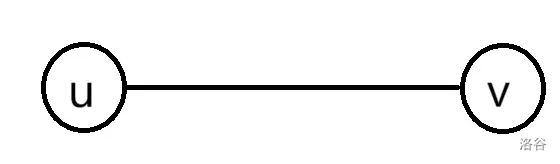
先定义一下,roger 走到 的时间为 ,student 走到 和 的时间分别是 和 , 和 的路程是 。
肯定,最优的情况是当 ,化简得到 ,所以 student 所走的总路程就是 ,也就是 ,那么时间就是 。
然后再处理第 种情况。
很轻松的可以得出:
$$(\frac{st_u}{v_2} - \frac{ro_u}{v_1}) \times v_1 + tv_1 = tv_2$$稍微解释一下,因为 roger 是提前到达的,所以需要乘上比 student 先到达的时间,右面两项就很显然了。
我们解出来就是 。
然后我们把 加上 student 到达 的时间就是答案了。
得到的是 。
现在只需要和上面相遇取一个最小值就是答案。
然后就做完了。
代码有点丑,谅解一下~
#include <bits/stdc++.h>
#define int long long
using namespace std;

const int N = 2e3+10;
const int M = 1e4+10;
const int inf = 0x3f3f3f3f3f3f3f3f;

struct node {
	int a, dis;
};

bool operator<(node x, node y) {
	return x.dis > y.dis;
}

int n, m, v1, v2;

int cost[M];
int cnt, head[N];
int nxt[M], to[M];

void connect(int u, int v, int w) {
	cnt++, cost[cnt] = w, to[cnt] = v;
	nxt[cnt] = head[u], head[u] = cnt;
}

int dstu[N], dro[N];
priority_queue<node> q;

int pos[N];

void student(int x) {
	memset(dstu, 0x3f, sizeof dstu);
	dstu[x] = 0;
	q.push({x, 0});
	while (!q.empty()) {
		int u = q.top().a, d = q.top().dis;
		q.pop();
		if (dstu[u] < d) continue;
		for (int i = head[u];i;i=nxt[i]) {
			int v = to[i], w = cost[i];
			if (dstu[v] > dstu[u] + w) {
				dstu[v] = dstu[u] + w;
				q.push({v, dstu[v]});
			}
		}
	}
}

bool comp(int x, int a, int y, int b) {
	if (x * b > y * a) return 1;
	return 0;
}

void roger(int x) {
	memset(dro, 0x3f, sizeof dro);
	dro[x] = 0;
	q.push({x, 0});
	while (!q.empty()) {
		int u = q.top().a, d = q.top().dis;
		q.pop();
		if (dro[u] < d) continue;
		for (int i = head[u];i;i=nxt[i]) {
			int v = to[i], w = cost[i];
			if (comp(dstu[v], v2, dro[u]+w, v1)) {
				if (dro[v] > dro[u] + w) {
					dro[v] = dro[u] + w;
					q.push({v, dro[v]});

				}
			}
		}
	}
}

void cmax(int &x, int &y, int a, int b) {
	if (x * b < a * y) x = a, y = b;
}

bool kmin(int x, int y, int a, int b) {
	if (x * b > a * y) return 1;
	else return 0;
}

signed main() {
	cin >> n >> m >> v1 >> v2; int u, v, w;
	for (int i = 1;i<= m;i++) {
		cin >> u >> v >> w;
		connect(u, v, w);
		connect(v, u, w);
	}
	int cur = 0;
	for (int i = 2;i<= n;i++) {
		student(i);
		roger(1);
		int uout = 0, dout = 1;
		for (int j = 1;j<= n;j++) {
			if (dro[j] >= inf) continue;
			int Smin = dstu[j];
			cmax(uout, dout, dstu[j], v2);
			if (v1 < v2) {
				for (int k = head[j];k;k=nxt[k]) {
					int v = to[k], w = cost[k];
					if (kmin(dstu[j] + dstu[v] + w, 2 * v2, dstu[j] - dro[j], v2-v1)) cmax(uout, dout, dstu[j]-dro[j], v2-v1);
					else cmax(uout, dout, dstu[j] + dstu[v] + w, 2 * v2);

				}
			} else {
				for (int k = head[j];k;k=nxt[k]) {
					int v = to[k], w = cost[k];
					cmax(uout, dout, dstu[j] + dstu[v] + w, 2 * v2);
				}

			}
		}
		cout << uout / __gcd(uout, dout) << "/" << dout / __gcd(uout, dout) << endl;
	}
	return 0;
}
- 1
信息
- ID
- 12588
- 时间
- 4000ms
- 内存
- 600MiB
- 难度
- 10
- 标签
- 递交数
- 1
- 已通过
- 1
- 上传者
-
 huangzheng